Close Form
Menu


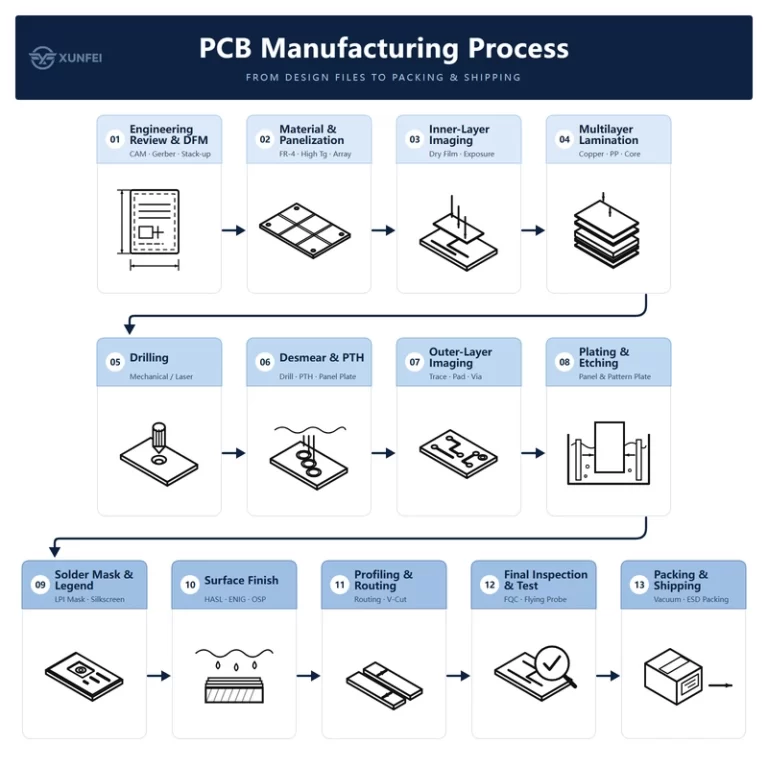
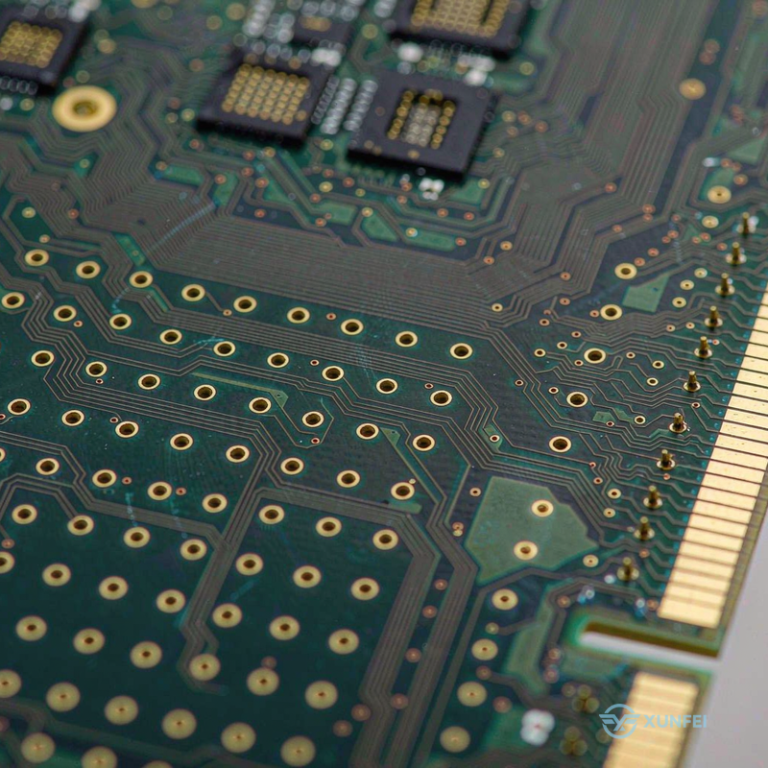
If you look at a typical PCB Printed Circuit Board, the first thing you notice is often its green surface. However, the green color does not come from the copper foil, and it is not usually the natural color of the FR-4 laminate. It mainly comes from a protective coating called solder mask, also known as solder resist.
Solder mask covers the areas that do not need to be soldered while leaving component pads and other required conductive areas exposed. Green became the dominant industry choice because it offers a practical balance of inspection visibility, process maturity, material availability, and cost. This is not because green automatically gives a board better electrical performance.
A printed circuit board typically includes a laminate structure, copper conductors, drilled or plated holes, surface finish, solder mask, and silkscreen. In a common rigid board, the FR-4 laminate is usually light-colored, while copper appears reddish-brown before surface finishing. The visible green layer is an insulating solder mask applied over the copper traces.
The solder mask creates openings above solder pads so that solder can wet the correct areas during assembly. It also separates neighboring conductors that should not be electrically connected. For a professional printed circuit board service, solder mask selection is part of the design-for-manufacturing and quality-control process, not merely a cosmetic decision.
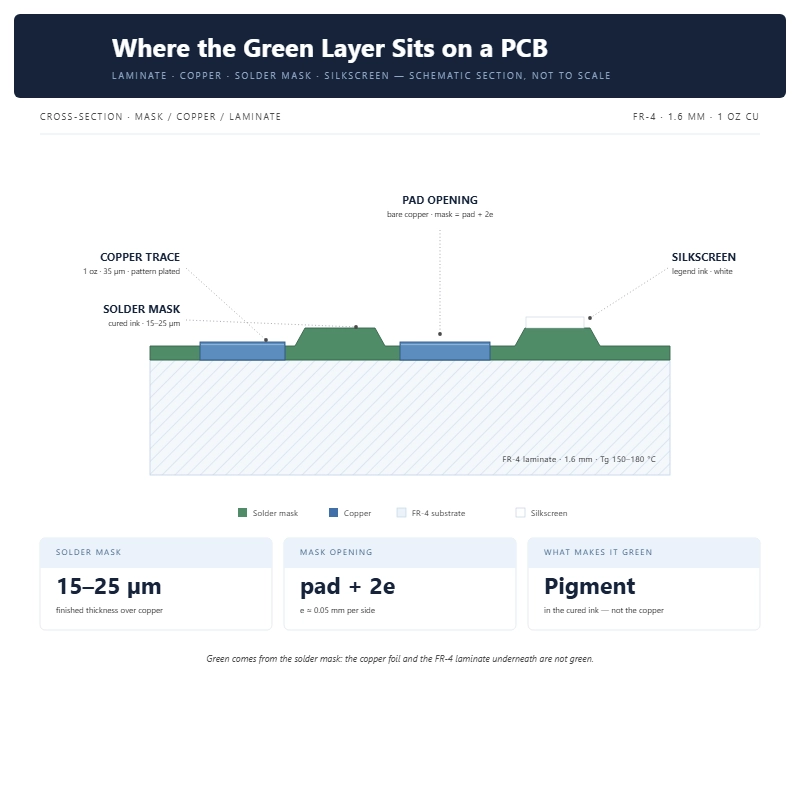
Figure 1. Solder mask covers the copper traces and opens only at the pads
Copper can oxidize when exposed to air, moisture, chemicals, and handling. Solder mask covers most copper traces and reduces their exposure. The exact protection level depends on the solder mask material, application process, surface finish, and operating environment.
Fine-pitch traces can be close to one another. A properly applied insulating layer reduces the risk of accidental contact caused by contamination, moisture, or solder spread. The design still needs appropriate clearance and solder mask rules; the coating is not a substitute for correct layout.
During reflow, selective soldering, or wave soldering, the mask blocks solder from spreading across non-pad areas. This helps reduce solder bridges and short circuits while leaving the intended pads available for bonding.
Solder mask can reduce the impact of minor scratches, handling, and certain chemical exposures. It also helps the board maintain a stable surface during storage and assembly. Reliability still depends on the complete material system and manufacturing process.
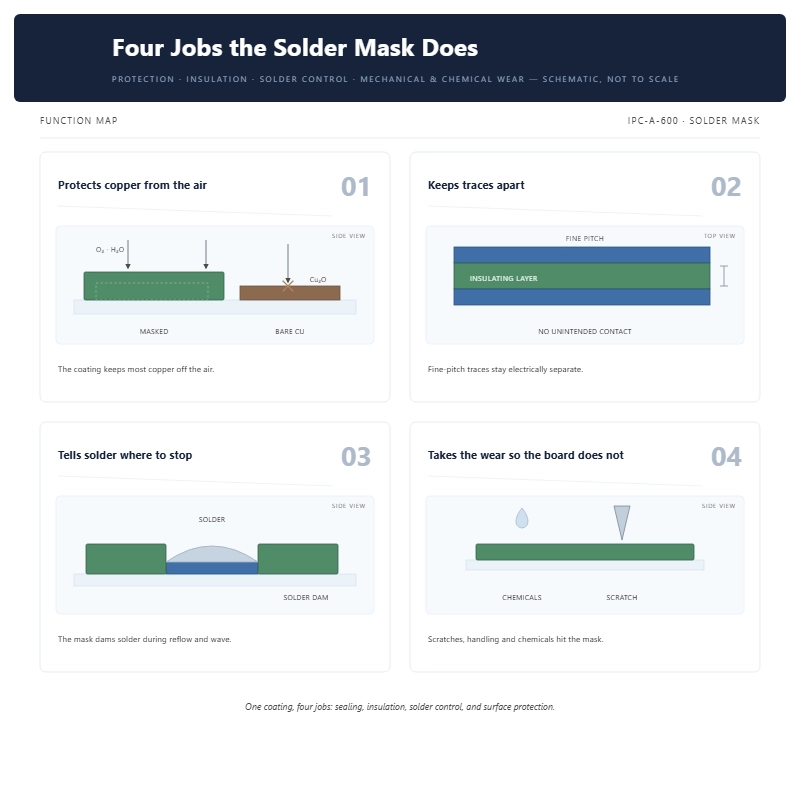
Figure 2. Four functions of the solder mask: sealing, insulation, solder control, and surface protection
One of the most useful properties of green solder mask is its moderate visual contrast. Silver-colored pads, white silkscreen, and exposed metallic areas are generally easy to distinguish from a green background. This helps operators inspect traces, pads, mask openings, scratches, pinholes, and other surface conditions.
Modern AOI, or automated optical inspection, uses cameras, controlled lighting, image processing, and programmed acceptance criteria to identify possible defects. AOI performance depends on the complete inspection setup, including lighting, camera resolution, programming, surface finish, gloss, and board variation. Green does not guarantee perfect inspection, but its familiar contrast has made it a practical default for many production environments.
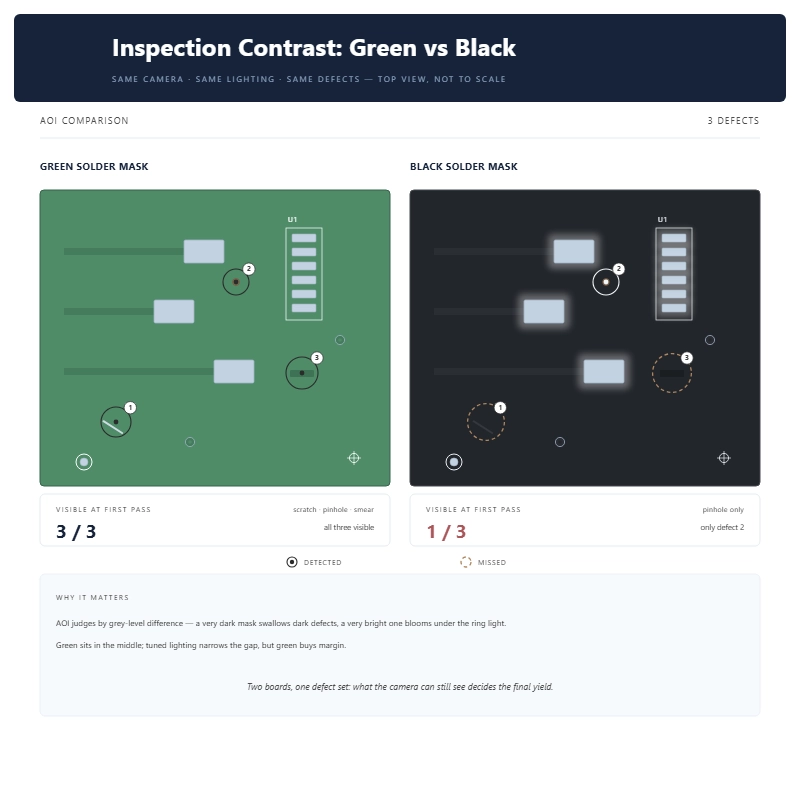
Figure 3. Same defect set on green and black masks: only the pinhole remains visible on black.
Green solder mask has been used at high volume for many years. Its material supply, qualification practices, screen printing or photoimageable processes, exposure, development, and curing parameters are familiar to many printed circuit board manufacturers. High-volume production usually makes a standard option easier to control and more economical than a low-volume special color.
This does not mean every green formulation is identical. Qualified material, coating thickness, adhesion, thermal resistance, chemical resistance, and curing quality still need to meet the buyer's specification. IPC materials guidance and related qualification requirements distinguish performance from appearance; color is only one part of the solder mask specification.
Once a color becomes common, the whole supply chain adapts to it. PCB designers place it in standard drawings, factories keep it in regular stock, inspection programs are tuned around common surface conditions, and customers select it without special approval. This creates a feedback loop: higher demand supports broader availability, and broader availability supports lower cost and shorter lead times.
That is why a standard custom printed circuit board quotation often lists green solder mask as the default while treating other colors as options. The default is a purchasing and manufacturing convention, not a statement that all other colors are inferior.
Green solder mask can be glossy, semi-gloss, or matte. Surface gloss and roughness can influence how a board reflects inspection lighting. Training material discussing IPC solder mask guidance notes that gloss and surface variation may affect AOI and the adhesion of a subsequent conformal coating; matte finishes are often considered when inspection or coating performance is important.
Therefore, a buyer should not specify only “green.” For repeat production, it can be useful to define the approved color range, gloss level, solder mask material, and sample acceptance method. This is especially important when a PCB board manufacturer is changing material suppliers or production locations.
No. The color of solder mask does not by itself determine a PCB's impedance, dielectric behavior, insulation performance, current capacity, thermal reliability, or service life. Those results depend on the laminate system, copper weight, stack-up, trace geometry, surface finish, solder mask properties, assembly profile, testing, and the intended environment.
For example, a black or blue board manufactured with an equivalent qualified material system can meet the same technical requirements as a green board. A color change may require process validation because pigments, opacity, exposure behavior, and visual inspection conditions can differ. That is a manufacturing-control issue, not proof that green has inherently better electrical properties.
Different colors are selected for different product goals:
A best PCB assembly service should be able to explain how the selected mask color affects inspection, stencil design, solder paste process, and final appearance. Color selection should be connected to the product's function and quality plan, not made from appearance alone.

Figure 4. Five solder mask colours in practice: green, blue, black, white and red
When requesting a quote for PCB manufacturing and assembly, specify the following items:
A reliable PCB assembly supplier should confirm material compatibility, process capability, inspection coverage, and sample approval before mass production. For projects that need high-quality PCB assembly, the supplier's documented controls are more meaningful than the board's color.
Most PCBs are green because green solder mask became a mature, widely available, inspection-friendly, and cost-effective industry default. The color is the result of several factors working together: the protective function of solder mask, practical contrast for manual and automated inspection, stable materials and processes, and decades of supply-chain standardization.
For a new custom printed circuit board project, choose the mask color according to the product's appearance, inspection method, optical requirements, and production plan. Then verify the complete specification with the selected printed circuit board manufacturers and assembly partner. A well-controlled process, suitable materials, and clear acceptance criteria matter more than whether the board is green, black, white, red, or blue.
1. Are green PCBs stronger than black or blue PCBs?
Not automatically. Mechanical and electrical performance depends on the complete material and manufacturing specification, not the visible color alone.
2. Is every green solder mask matte?
No. Green solder mask can be glossy, semi-gloss, or matte. The approved gloss level should be specified when visual consistency or AOI performance matters.
3. Does “lead-free green” describe a color?
No. “Lead-free” generally describes the absence of lead in the relevant material or soldering process. It should not be confused with green color. The exact environmental declaration should be confirmed with the supplier.
4. Does a custom color always increase the price?
Not always, but it may. The effect depends on supplier inventory, minimum order quantity, material qualification, process setup, inspection requirements, and production volume.
5. Can any PCB color be used for SMT assembly?
Most common colors can be used, but the assembly process must be validated for the actual solder mask, surface finish, component mix, lighting, and inspection program. The color alone does not determine SMT capability.
6. How should I choose a supplier for a custom board?
Compare engineering review, material traceability, DFM support, AOI and electrical testing, assembly capability, sample approval, change control, and after-sales communication. Use color as a specification, not as the main quality metric.