Close Form
Menu


China has become one of the most important sourcing destinations for PCB and electronic manufacturing because it offers more than competitive pricing. The country has developed a highly integrated electronics ecosystem covering raw materials, circuit board fabrication, component sourcing, assembly, testing, packaging, and logistics.
For global buyers, this concentration creates several practical advantages. A project can move from design review to prototype production, engineering validation, mass production, and final assembly within a coordinated supplier network. This reduces communication delays and makes it easier to manage production changes.
The Chinese market also includes suppliers with different specialties. Some focus on standard multilayer boards, while others provide high-frequency boards, high-speed boards, aluminum PCBs, rigid-flex boards, or complete electronics manufacturing services. This gives buyers more flexibility when selecting a solution for a specific application.
Another important advantage is production flexibility. Chinese factories can often support a small quantity for research and development while also maintaining the capacity required for large-scale production. This is particularly valuable for international companies that need to validate a new product before making a full production commitment.
In short, China’s PCB advantage comes from the combination of supply chain completeness, manufacturing depth, engineering support, production flexibility, and integrated delivery capabilities.

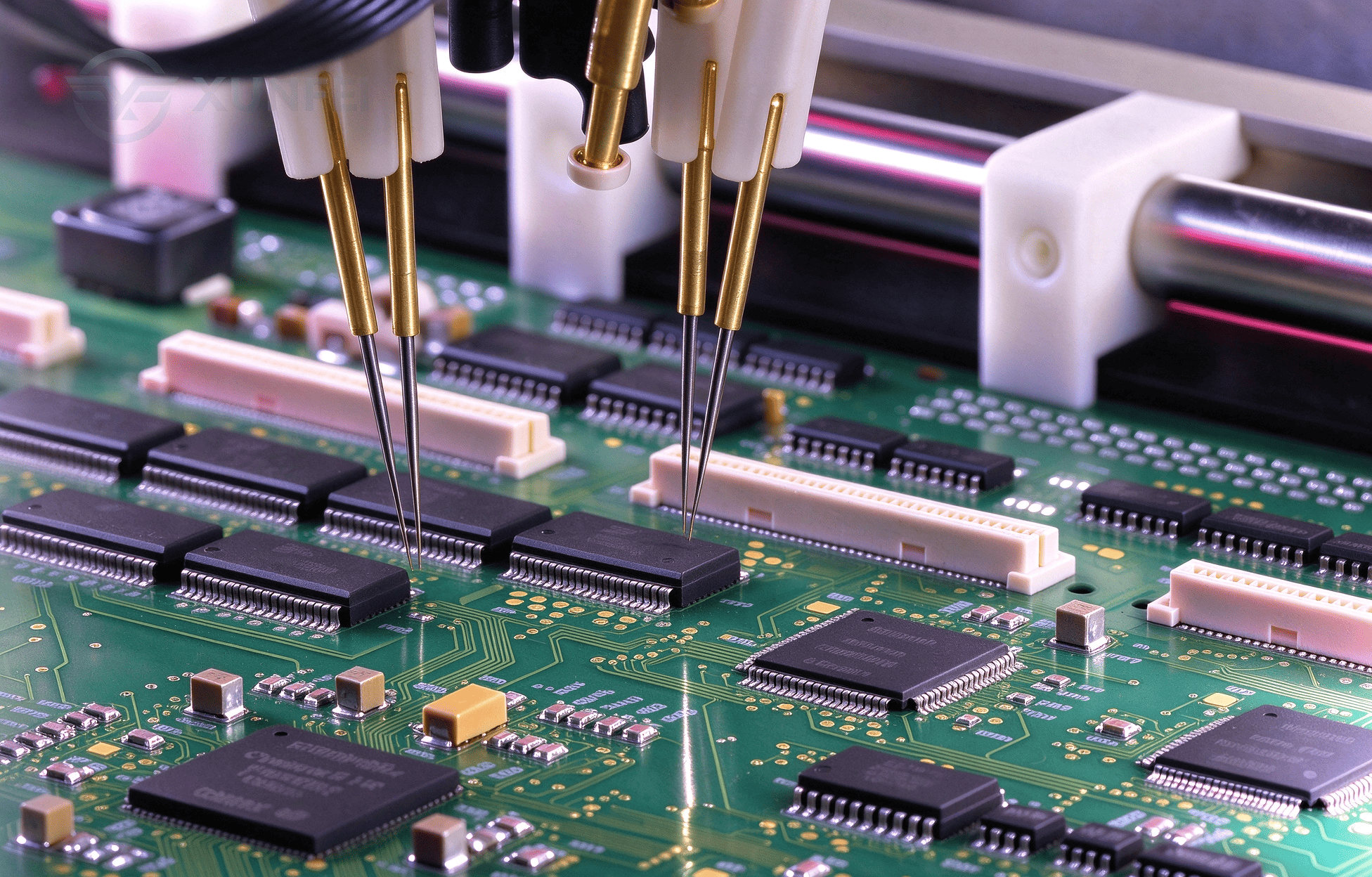
High-density multilayer PCB with immersion gold pads, produced in China.
A PCB project depends on more than the board fabrication process. It also requires reliable material sourcing, engineering coordination, component availability, assembly capacity, testing, and shipment management.
China has strong supporting capabilities across these areas. Raw materials can be sourced through established industrial networks, while PCB factories can coordinate with component distributors and assembly providers. This makes it easier to respond to design changes, material substitutions, and urgent production requirements.
For many international buyers, the biggest value is the ability to work with one coordinated manufacturing partner. A qualified supplier can help review Gerber files, identify manufacturability risks, recommend suitable materials, and optimize the design before production begins.
The keyword PCB Printed Circuit Board represents the basic foundation of modern electronic products. However, the actual sourcing decision usually involves much more than the board itself. Buyers must consider engineering support, component procurement, assembly quality, testing procedures, and after-sales communication.
A strong PCB supplier should be able to support the full product development cycle. This includes early-stage prototypes, design validation, pilot production, process optimization, and volume manufacturing.
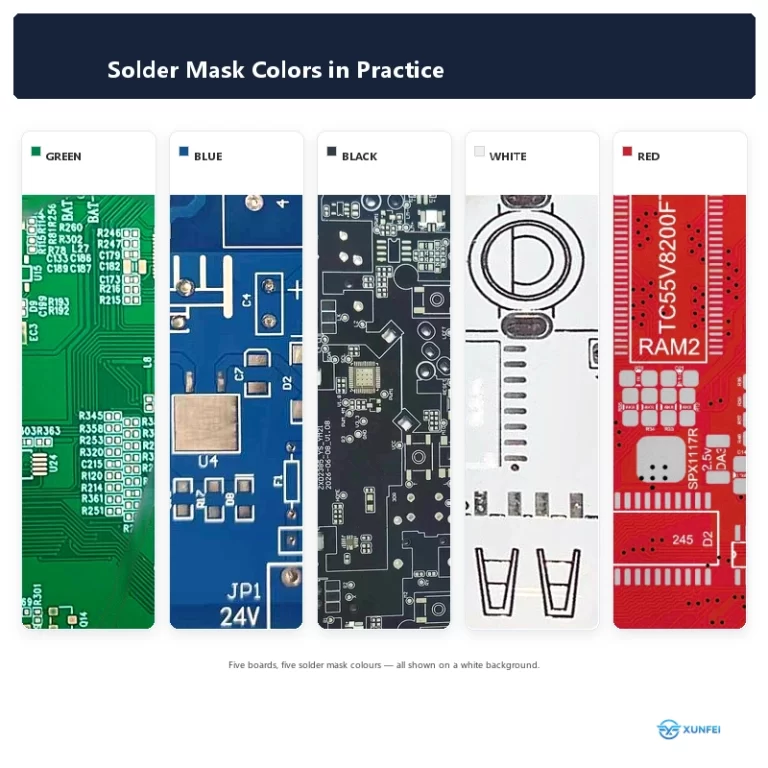
Professional printed circuit board manufacturers can provide design-for-manufacturing feedback before production. They may identify issues related to trace width, spacing, drilling, impedance, solder mask, component placement, or thermal management. Early identification of these risks can reduce redesign costs and prevent production delays.
When buyers need a custom printed circuit board, the supplier must also understand the application environment. For example, a power supply board may require special attention to current capacity and thermal performance, while a high-speed communication board may require controlled impedance and low-loss materials.
China’s manufacturing network is capable of serving both standard and highly customized requirements. This allows buyers to start with a prototype, verify performance, and then transfer the same design into controlled mass production.
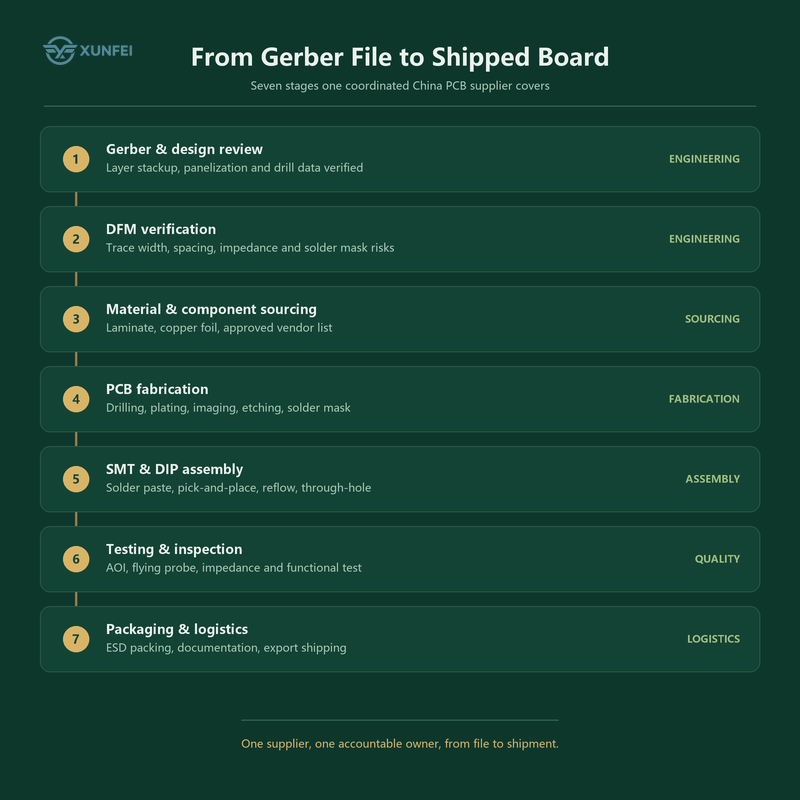
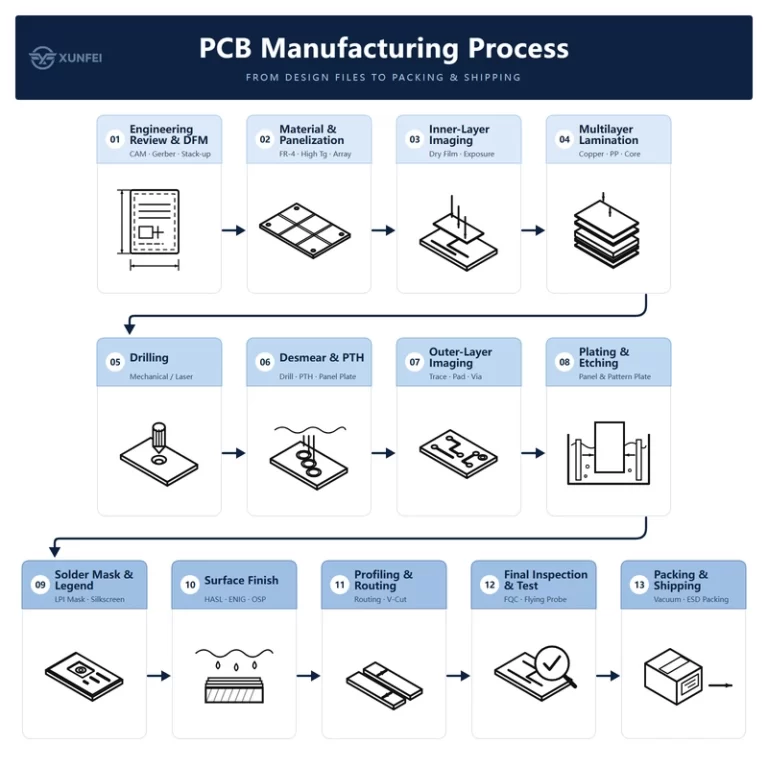
Seven manufacturing stages one coordinated China PCB supplier covers, from Gerber file to shipped board.
Many buyers no longer want to purchase bare boards from one supplier and assembly services from another. They prefer a coordinated solution that covers PCB fabrication, component sourcing, SMT placement, DIP assembly, inspection, functional testing, and packaging.
This is where Printed Circuit Board Assembly becomes important. An integrated supplier can coordinate the board design, component list, assembly process, and testing requirements more efficiently.
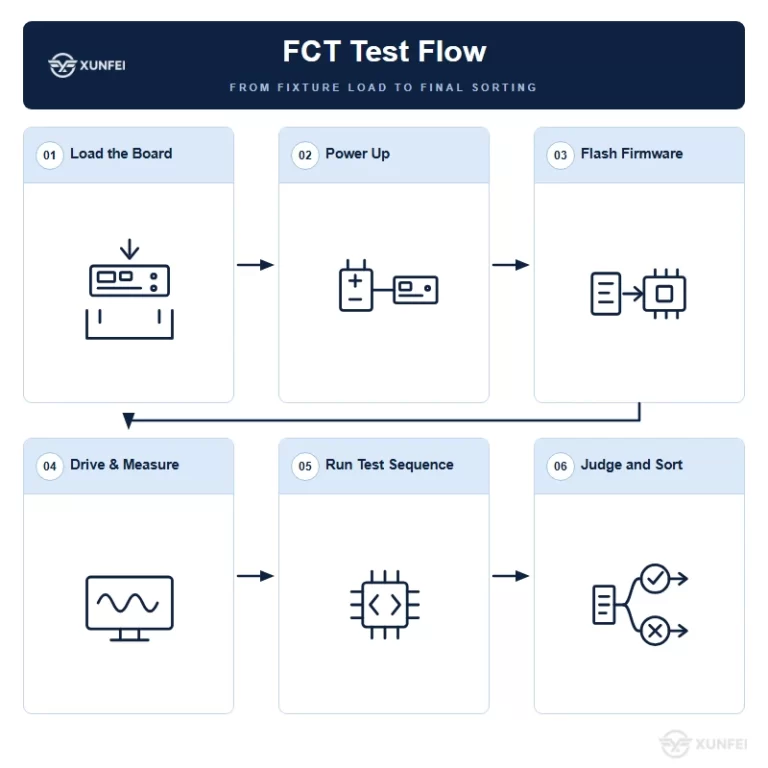
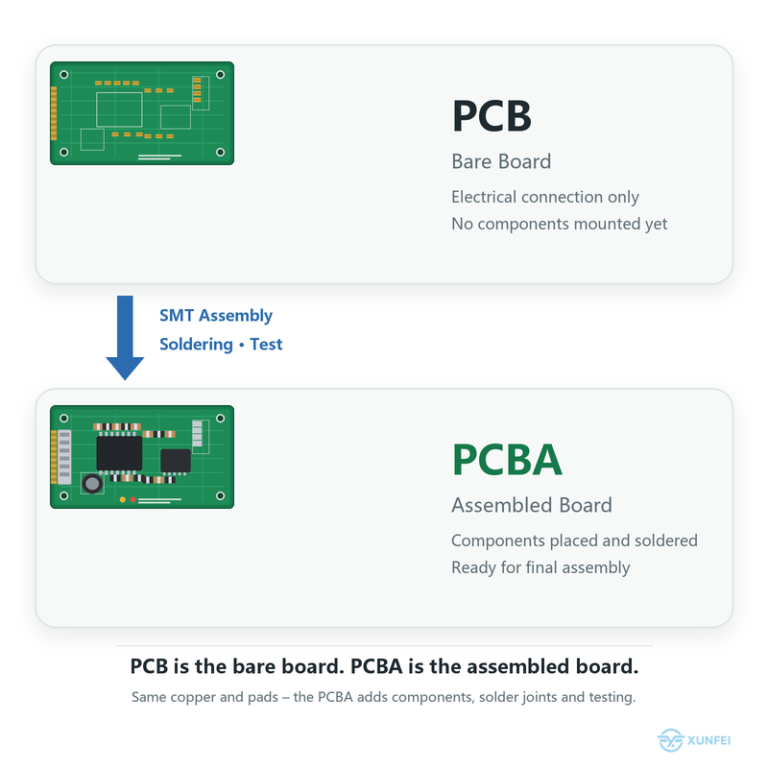
The term printed circuit board assembly pcba is often used to describe the process of turning a bare circuit board into a functional electronic assembly. The process may include solder paste printing, automated placement, reflow soldering, through-hole assembly, visual inspection, electrical testing, and final packaging.
A capable printed circuit board assembly manufacturer should be able to manage both technical and supply chain risks. These include component shortages, alternative part approval, soldering defects, production yield, and test coverage.
For buyers, using one coordinated partner can simplify communication and improve responsibility ownership. If a quality issue occurs, the supplier can investigate the relationship between the PCB design, materials, components, and assembly process instead of treating each issue separately.
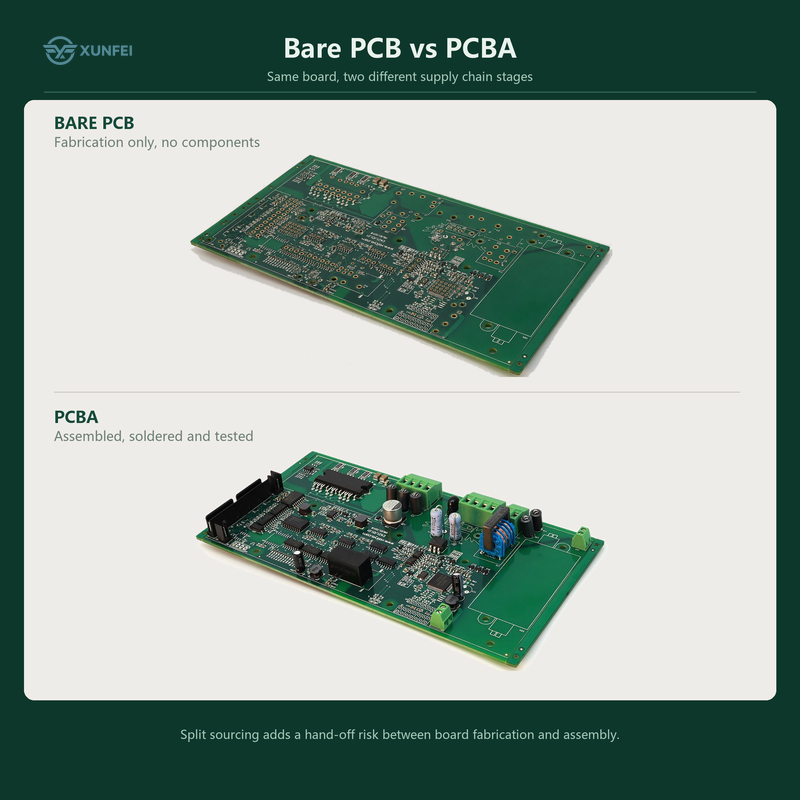
The same board as a bare PCB and as a finished PCBA
From custom PCB fabrication to complete PCBA solutions, get professional manufacturing support for your electronics projects.
Share your requirements and get in touch with our team.
Price is important, but the lowest quotation does not always represent the lowest total cost. Buyers should evaluate material quality, production yield, engineering support, inspection, packaging, shipping, and delivery reliability.
The printed circuit board cost may be affected by several factors, including board size, layer count, copper thickness, material type, surface finish, minimum trace width, hole structure, impedance requirements, order quantity, testing requirements, and delivery schedule.
A low-quality board may create hidden expenses through higher defect rates, delayed assembly, field failures, or repeated production. Therefore, a better purchasing strategy is to compare total value rather than only the initial unit price.
When companies buy printed circuit board products from China, they should request a detailed quotation that clearly separates board fabrication, tooling, testing, components, assembly, packaging, and shipping. This makes supplier comparisons more transparent.
A reliable supplier should be evaluated through documented capabilities rather than marketing claims. Buyers can begin by checking the supplier’s product range, production equipment, quality certifications, engineering team, inspection process, and relevant application experience.
It is also important to confirm whether the supplier is a real manufacturing company or only a trading intermediary. A professional pcb board manufacturing company should be able to explain its process flow, production limitations, quality checkpoints, and delivery controls.
Buyers should also request sample information and clarify how design changes are managed. Important questions include whether engineering changes require written approval, how nonconforming products are handled, and whether production records can be traced by batch.
A suitable printed circuit board factory should provide clear communication before, during, and after production. Transparent reporting is especially important for overseas customers because time-zone differences and international logistics can make problem resolution more difficult.
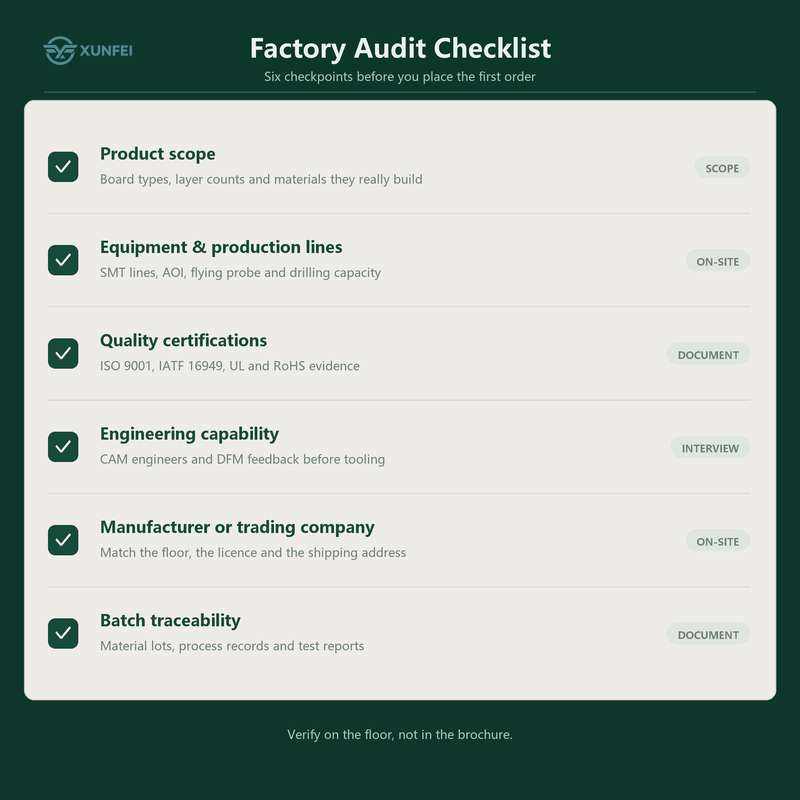
Factory audit checklist: six points to verify on site before placing the first order
China’s PCB supply chain supports a broad range of industries, including consumer electronics, industrial automation, power equipment, security systems, communication devices, medical electronics, automotive electronics, and renewable energy products.
Consumer electronics often require compact designs, fast product updates, and flexible production volumes. Industrial equipment usually places greater emphasis on reliability, operating life, and environmental resistance. Power and energy products may require thicker copper, stronger thermal management, and enhanced safety testing.
Because Chinese suppliers cover many material systems and production processes, they can recommend different solutions according to the application. This helps buyers balance performance, reliability, delivery time, and manufacturing cost.
China has become a preferred PCB sourcing destination because it combines complete supply chain support with strong manufacturing capacity and flexible production services. From prototypes and custom boards to mass production and Printed Circuit Board Assembly, Chinese suppliers can support different stages of the electronics product lifecycle.
For global buyers, the right strategy is not simply to search for the lowest price. It is to select a qualified partner that can provide stable quality, transparent communication, engineering support, reliable delivery, and a competitive total cost.
Tell us about your PCB requirements. Let's explore a suitable manufacturing solution for your project.
Contact our team to discuss your specifications, production volume, and delivery requirements.
Custom Solutions · Quality Control · Production Support