LED PCB Introduction: From Base Materials to Thermal Design
Release time:10/13/2026
Share to:
How LED PCB materials and thermal design help you source reliable boards.
This article covers everything you need to know about LED PCBs. It aims to clear all your doubts and help you make informed decisions.
1. Foreword: What Is an LED PCB?
LED PCB is a printed circuit board specifically designed for LED circuits. LEDs generate a significant amount of heat during operation, so these boards require excellent thermal management. Most LED PCBs are metal-core printed circuit boards (MCPCBs-). Their substrate is typically aluminum, which offers good thermal conductivity.
1.1 What Is LED?
Before diving deeper into LED PCBs, let's briefly understand what an LED is. A light-emitting diode (LED) is an electronic component made from highly doped semiconductor materials, compound semiconductors such as gallium nitride (GaN). Like a normal diode, an LED contains a p-n junction. However, unlike a normal diode, an LED emits light when a certain level of current passes through it.
1.2 Substrate Materials
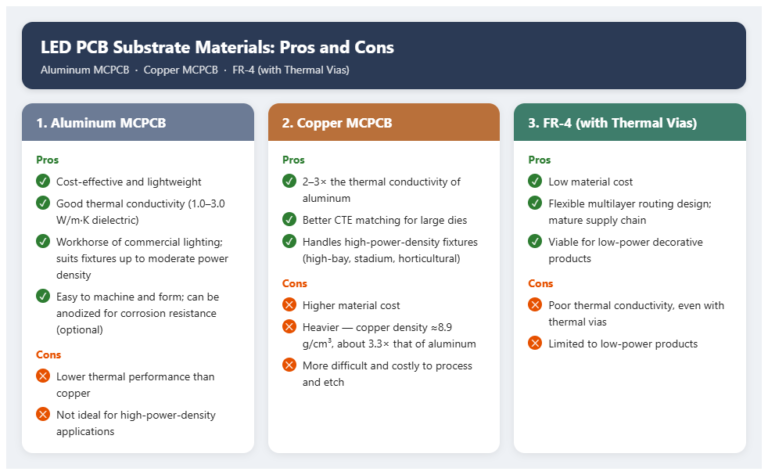
LED PCBs use a special thin layer of thermally conductive material. This layer dissipates heat much more quickly than standard PCB boards. Aluminum is the most common material used in LED circuit boards. Besides aluminum, other substrate materials include FR-4, polyimide (PI), aluminum nitride, aluminum oxide, and copper.
2. Benefits of LED PCBs
Here is a list of benefits you can enjoy when using LED circuit boards in your electronic circuit design.
2.1 Light Weight and Small Size
LED PCBs are lightweight and compact. You can use them in projects that require small-sized, lightweight boards. They won't add significant weight to the overall electronic circuitry.
2.2 Low Power Consumption
Compared to other light sources such as incandescent bulbs, LEDs consume far less power. They also dissipate much less heat. According to studies, LEDs use 75% less energy than traditional bulbs. This means that using LED PCBs helps you save electricity significantly.
2.3 Wide Range of Options
LED PCBs come in various types, sizes, and specifications. This wide availability makes it easy to find a board that fits your specific project requirements.
2.4 Reduced Operating Costs
Using LED PCBs instead of other light sources has proven to reduce operating costs. LEDs are more efficient and last longer, which means they save you money in the long run.
3. Thermal Design Considerations
3.1 Why Does Thermal Design Matter?
Heat is the number one enemy of LED performance and longevity. Unlike incandescent bulbs that radiate most of their energy as infrared heat, LEDs convert a large portion of input power into visible light—but they still generate significant waste heat at the semiconductor junction. If this heat is not managed properly, it accumulates and raises the junction temperature, triggering a cascade of problems.
3.2 How Heat Affects the PCB
Excessive heat doesn't just damage the LED chip—it also degrades the PCB itself. High temperatures can delaminate the dielectric layer, warp the board, and weaken the bond between the copper traces and the substrate. Over time, these failures lead to open circuits, short circuits, or complete board failure.
3.3 Core Principles of Thermal Design
Effective thermal design follows a simple logic: move heat away from the junction as fast as possible, then dissipate it into the environment. This involves three key steps:
·Select a High-Conductivity Substrate::Aluminum MCPCBs offer 1.0–3.0 W/m·K dielectric conductivity. Copper-based substrates provide even higher values. Choose the substrate based on your power density requirements.
·Optimize the Thermal Path: Minimize the number of interfaces between the LED chip and the ambient air. Use thermal vias, thick copper layers, and thermal interface materials (TIMs) to reduce thermal resistance at each junction.
·Integrate System-Level Cooling: Board-level design alone is often insufficient. Combine it with heatsinks, forced-air fans, or even liquid cooling for high-power applications.
In short, thermal design is not an optional add-on—it is a fundamental requirement for any LED PCB project. Good thermal management ensures consistent brightness, stable color, long lifespan, and reliable operation. Always prioritize board-level thermal engineering, not just external heatsinks.
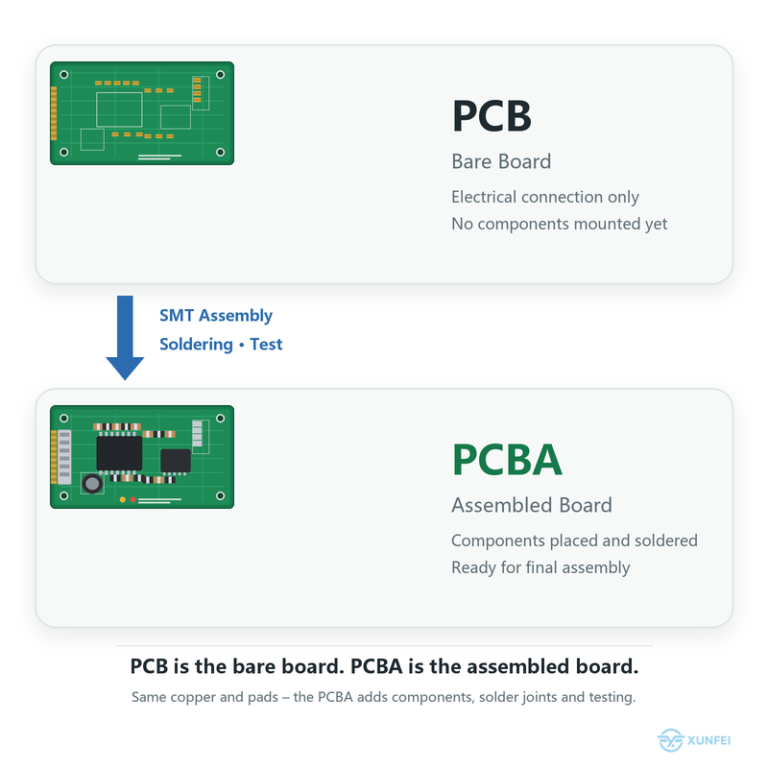
Now that you understand what makes a reliable LED PCB, the next question is where to source it.When choosing a supplier, look for manufacturers that specialize in LED PCB fabrication and assembly. Xunfei Time Technology (Shenzhen) Co., Ltd. is such a partner — a one-stop PCB & PCBAmanufacturer with nearly 30 years of experience. Browse our product showcase and case-study pages to see a wide range of real LED product examples. Quality, speed and cost savings — all in one partner.